Heritage restoration quotes
Repairing historic fabric means diagnosing why masonry, roofs, timber, plaster or finishes have failed, then stabilising and matching them without erasing significant detail. It is needed where water ingress, decay, movement or unsuitable previous repairs threaten the building’s appearance, performance or surviving original material.
What this covers
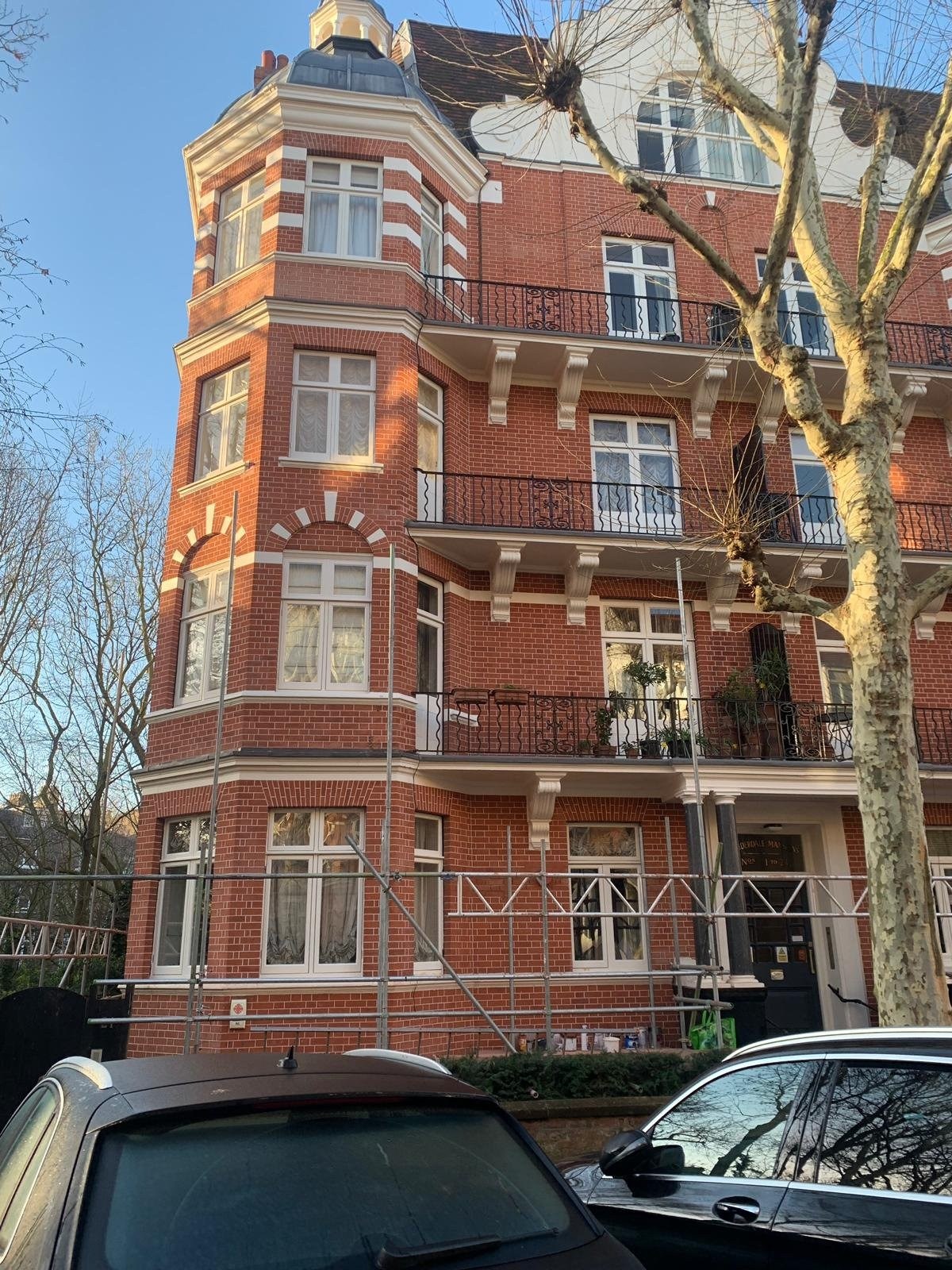
The first task is inspection: a specialist examines masonry, pointing, render, timber, roof coverings, rainwater goods, openings and internal finishes, looking for moisture paths, biological decay, settlement or incompatible repairs. Photographs, measured notes and retained samples can establish what is original and what was added later.
Work then proceeds from cause to consequence. Leaking gutters may be repaired before internal plaster is renewed; failed cement pointing may be removed carefully before softer lime mortar is applied; decayed timber is exposed to determine whether a local splice will preserve sound wood. Loose ornaments, mouldings and tiles are labelled and stored during removal.
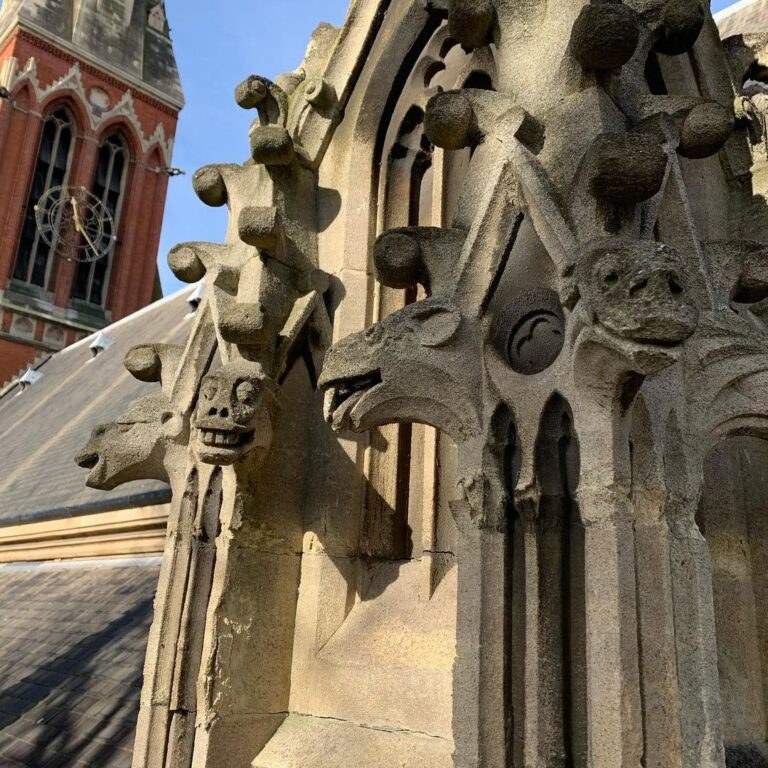
Restoration may involve cleaning, consolidation, repair, partial replacement or carefully matched new work. The aim is not to make every surface appear new. Sound historic material is retained where it can perform safely, while interventions remain legible on close inspection but visually compatible at normal distance. Final making-good includes breathable finishes, renewed weathering details and records of concealed repairs.
How the work is done
The process normally begins with an on-site inspection and a written record of defects, materials, previous repairs and areas that cannot be disturbed. If water is involved, the inspection follows the route from roof, flashing, gutter or ground level to the internal symptom rather than treating the stain alone.
Next, the scope is agreed. The contractor may use trial openings, gentle cleaning or small exposed areas to confirm the construction. Loose components are protected, numbered and removed only where necessary. Temporary weathering, propping or security measures may be installed before the main repair.
Repair then follows the agreed sequence: stop the cause, stabilise unsafe or detached fabric, clean without eroding detail, repair sound material and replace only what is beyond recovery. New work is matched for profile, colour, texture and breathability. The final stage includes making-good, removing protection, checking drainage and recording materials and concealed junctions for later maintenance.
What affects the cost
The largest cost differences usually come from the amount of investigation, access and hand work required before visible restoration begins. A straightforward repair to exposed, sound fabric is different from work behind finishes, at height or within a congested building where protection and staged access are needed.
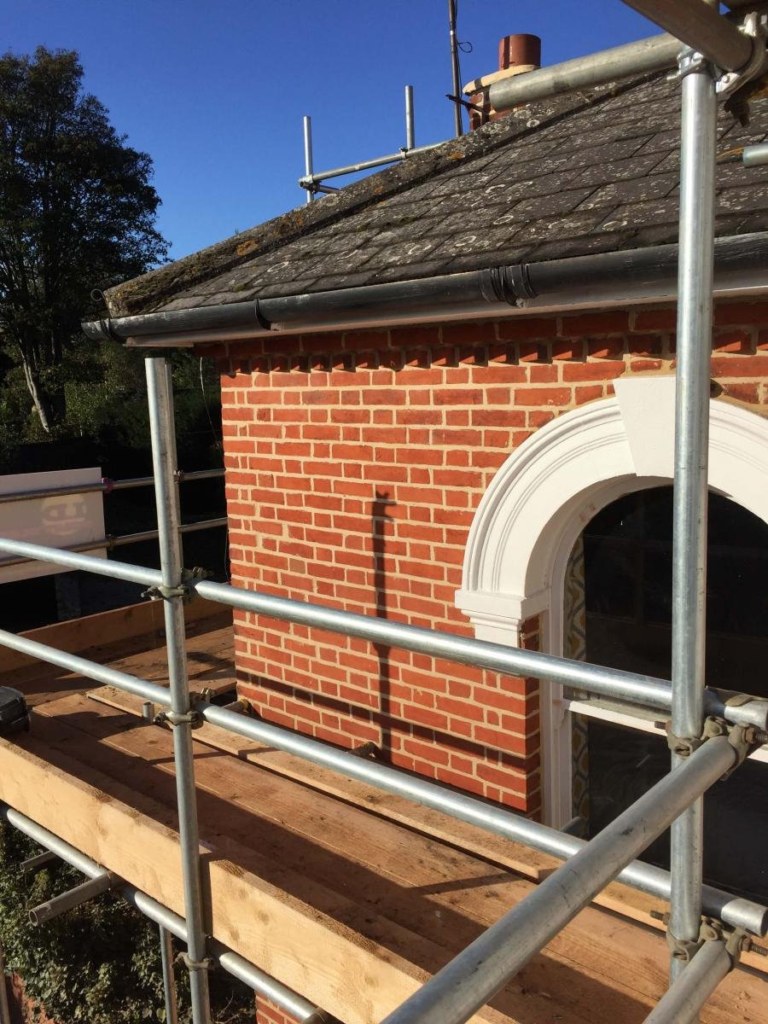
Scaffolding, edge protection, lifting, temporary weathering, dust control, security and waste removal should be identified separately or clearly included. Listed or highly detailed fabric may require slower dismantling, samples, mock-ups and specialist finishing. Matching handmade brick, stone, tiles, timber sections, glass, ironmongery or decorative plaster can also increase material and fitting work.
The cause affects the scope: repairing a gutter, flashing, drainage defect or ventilation problem may be essential before decoration. A quote should distinguish investigation, stabilisation, repair, replacement, making-good and final cleaning, and state how concealed decay or additional defects will be handled rather than hiding them within an unexplained allowance.
Before you hire
Job-specific competence shows in diagnosis and restraint. A capable provider can explain why a repair is needed, identify the existing masonry, timber or finish, and distinguish a local defect from movement or water entering elsewhere. Look for sample panels, compatible material proposals, labelled salvage procedures and a clear method for protecting retained fabric.
Their written scope should separate stabilisation, repair and replacement, describe cleaning limits and explain how concealed decay will be reported. Experience is more credible when demonstrated through comparable details—such as lime pointing, sash joinery, decorative plaster, roof slates or carved stone—rather than through a broad claim about heritage work.