Groomers quotes
Professional groomers wash, dry, brush, trim and style pets according to their coat, breed characteristics and welfare needs. They are useful for routine hygiene, mat removal, nail care and coat problems that owners cannot safely manage at home, while identifying skin, ear or mobility concerns that may need veterinary attention.
What this covers
The work starts with a visual and hands-on assessment of the pet's coat, skin, nails, ears and general tolerance of handling. The groomer should note matting, parasites, irritation, lumps, wounds or painful movement, referring concerns to a vet rather than diagnosing them.
The coat is prepared by brushing, combing or carefully removing knots. Severe matting may need clipping rather than forceful dematting, because pulling can injure skin. A suitable shampoo is selected, the pet is rinsed thoroughly and drying is controlled to prevent chilling, overheating or distress. Depending on the coat and requested finish, the groomer then clips with guards, scissor-shapes, tidies feet and hygiene areas, or leaves length while improving manageability. Nails may be shortened where safe, and ears may be cleaned only within the agreed scope.
The final stage checks for missed tangles, uneven areas, irritated skin and safe nail length. The owner should receive practical advice on brushing frequency, bathing, coat changes and any signs needing veterinary assessment. Grooming cannot replace veterinary treatment, behavioural therapy or treatment for skin disease.
How the work is done
Before work begins, the groomer discusses the requested finish, the pet's behaviour, medical history, previous grooming and any areas that are painful or difficult to handle. The coat is then inspected for knots, parasites, dampness, skin changes and areas where clipping may be safer than brushing.
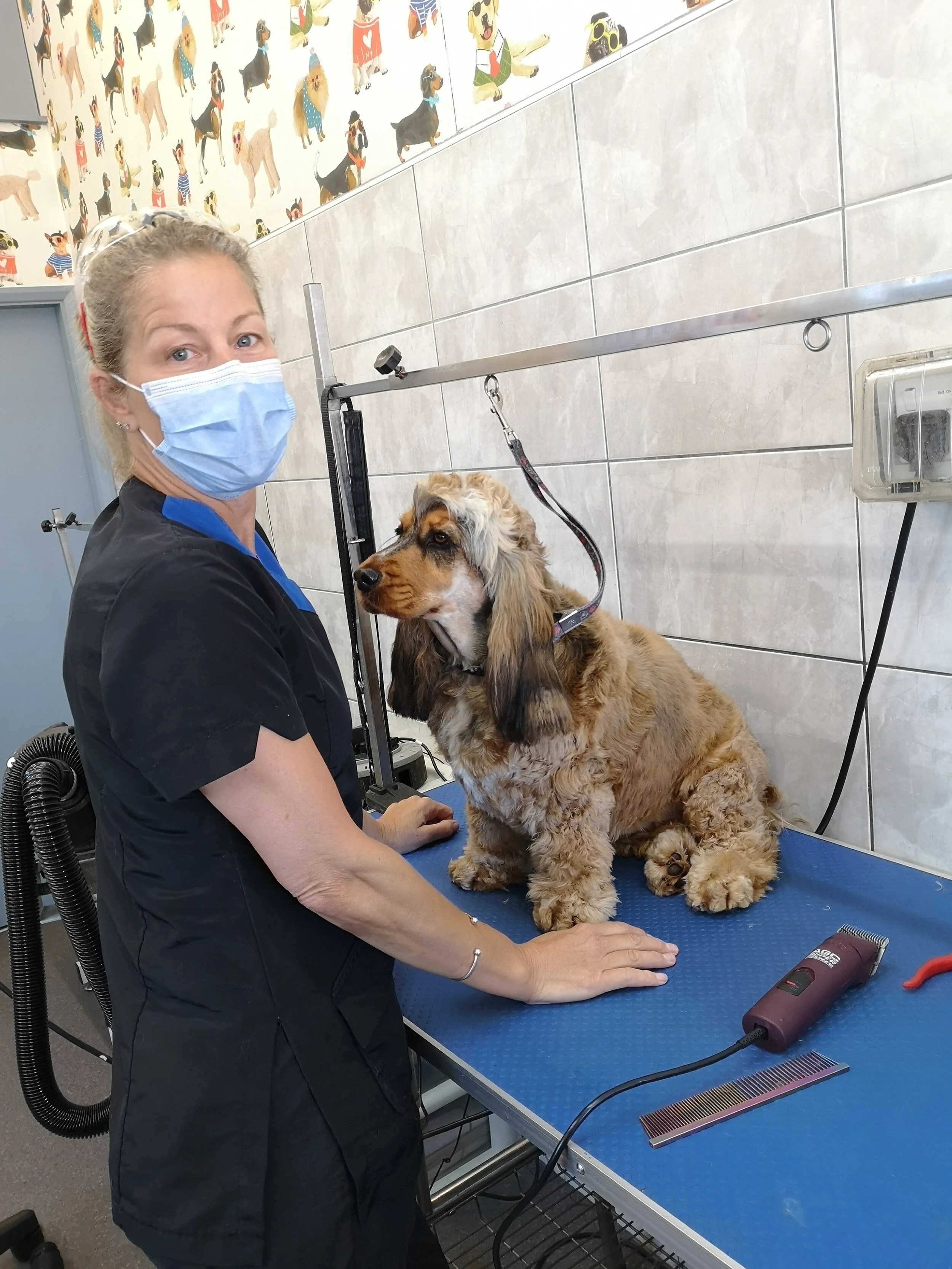
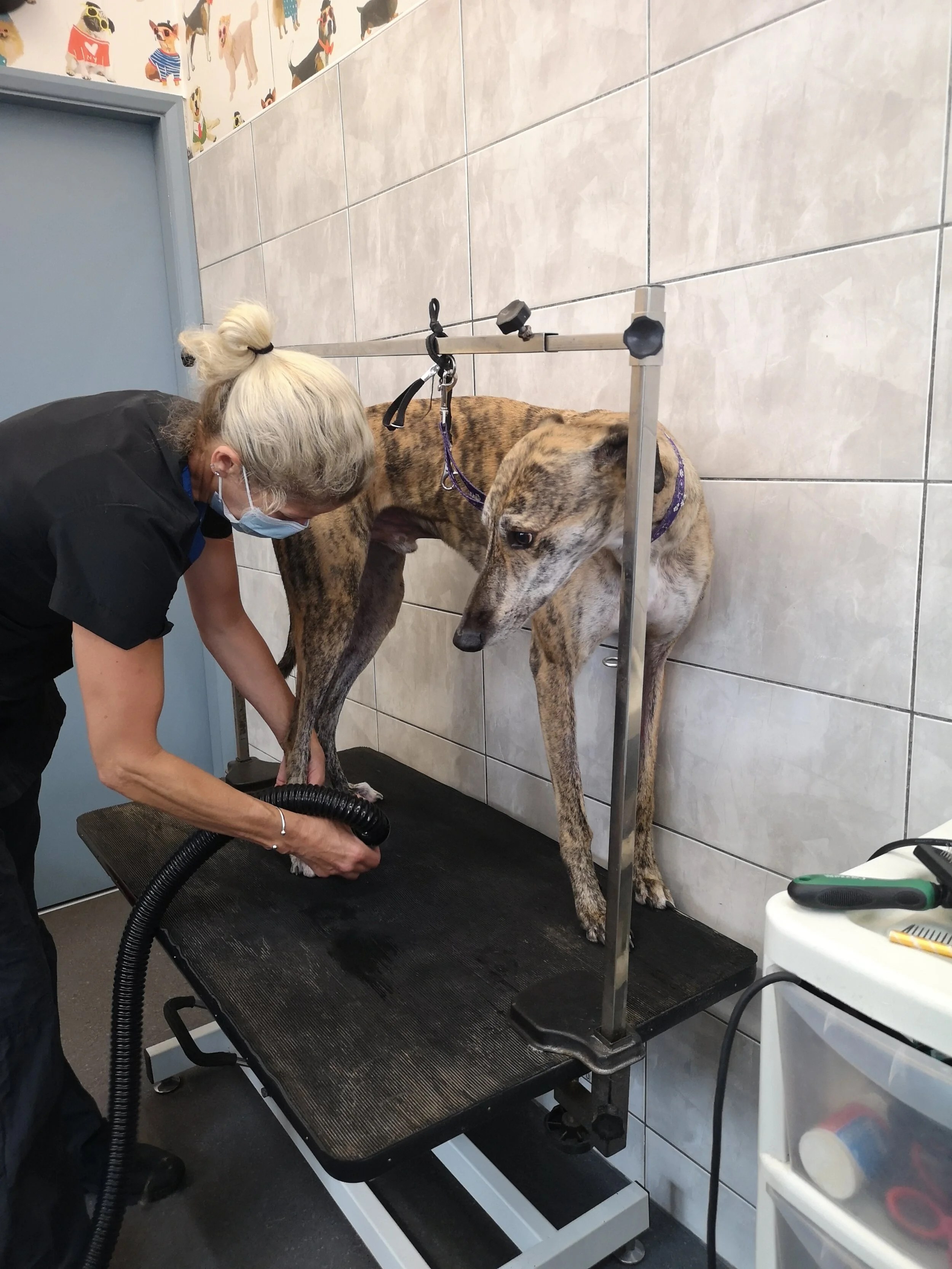
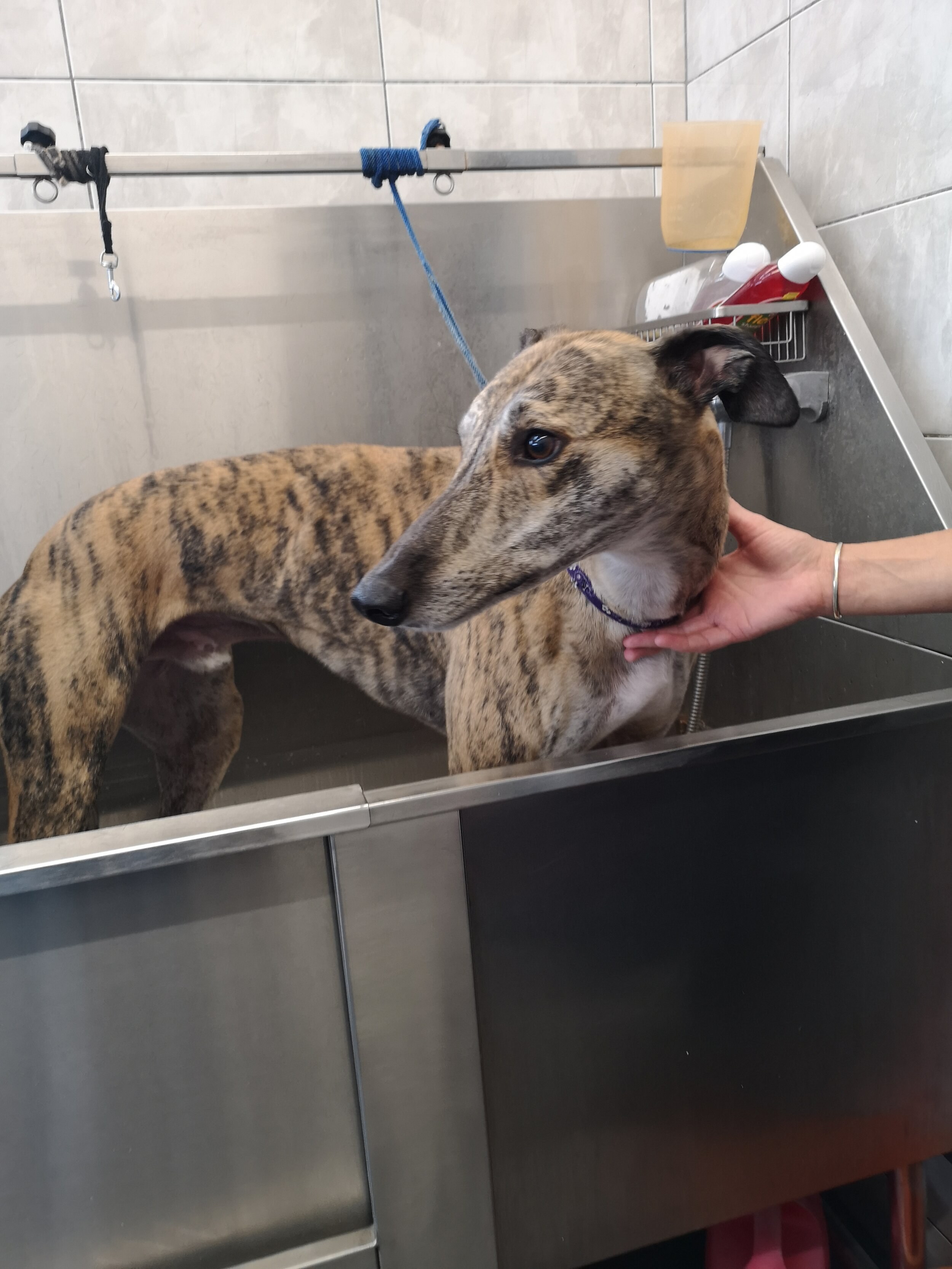
The pet is brushed or clipped as appropriate before bathing, because wet mats can tighten. Shampoo is applied according to the coat and skin condition, followed by thorough rinsing. Drying may use a towel, stand dryer or hand dryer, with distance, airflow and pauses adjusted for comfort. The groomer watches for stress signals throughout.
Once dry, the coat is clipped or scissored to the agreed shape. Feet, face and hygiene areas receive careful finishing, while nails are trimmed if the pet can tolerate it safely. The groomer checks symmetry, remaining tangles and skin response before returning the pet.
The handover should explain what was done, any difficulties encountered and the home-care routine needed to maintain the result.
What affects the cost
The main cost drivers are the pet's size, coat density, coat condition and the amount of time needed for preparation and finishing. Heavy matting, compacted undercoat, neglected nails or repeated stopping for stress can make the appointment more involved than a routine tidy.
The requested result also matters. A short clip, breed-style finish, hand-stripping, scissoring and additional face, feet or hygiene work require different equipment and handling. A nervous, elderly, reactive or physically uncomfortable pet may need a slower approach, additional staff support or a shorter session, subject to the groomer's safe working policy.
Ask what the quoted service includes: bathing, drying, brushing out, clipping or scissoring, nail trimming, ear cleaning, dematting, collection and any surcharge for severe coat condition. Travel, mobile equipment access, cancellations and veterinary referral may affect the arrangement. A clear quote should distinguish agreed grooming from treatment that belongs with a vet.
Before you hire
Job-specific competence shows in the initial coat and welfare assessment, not just in a polished result. A capable groomer can explain why clipping, scissoring or hand-stripping suits the coat, identify when dematting is unsafe, and describe how drying and restraint will be adapted for the pet.
Look for clear discussion of handling limits, consent before a substantial change in length, clean equipment between pets and a willingness to stop when pain, distress or a medical concern becomes apparent. Useful evidence includes photographs of comparable coat work, a written record of the agreed finish and practical aftercare tailored to that pet.